 Case Study 06
Assembled vs. Inevitable: What’s Your Reveal?
September 2, 2026
Every reveal is either assembled or inevitable: same information, completely different experience. The finding on Wash Will Tell’s Act 3, and the one-lever fix that moved it from one to the other.
Read → Writer's Map
Coverfly, ScreenCraft, and WeScreenplay Are Gone. Here’s Where Screenwriters Are Going Now.
August 27, 2026
All three closed in 2025. An honest map for the three questions they used to answer — coverage, competitions, and the industry’s appetite — and where working screenwriters are going for each one now.
Read → The Reader's Note · Vol. 07
The Cold Open Is a Promise, Not a Trailer
August 27, 2026
Most cold opens are built as hooks — loud enough to buy an audience's attention before the title card. The best ones are doing something else entirely: making a promise the next 10 episodes have to keep. Here's the test for whether your opening is a thesis or just the best three pages you had, and why it matters whether you're writing the pilot or optioning it.
Read → How-To
How to Tell the Difference Between a Note and an Opinion
August 24, 2026
Not every note in your coverage deserves the same response. A practical framework for sorting real script notes from one reader's personal taste — three questions to run any note through, and what to do when it's genuinely both.
Read →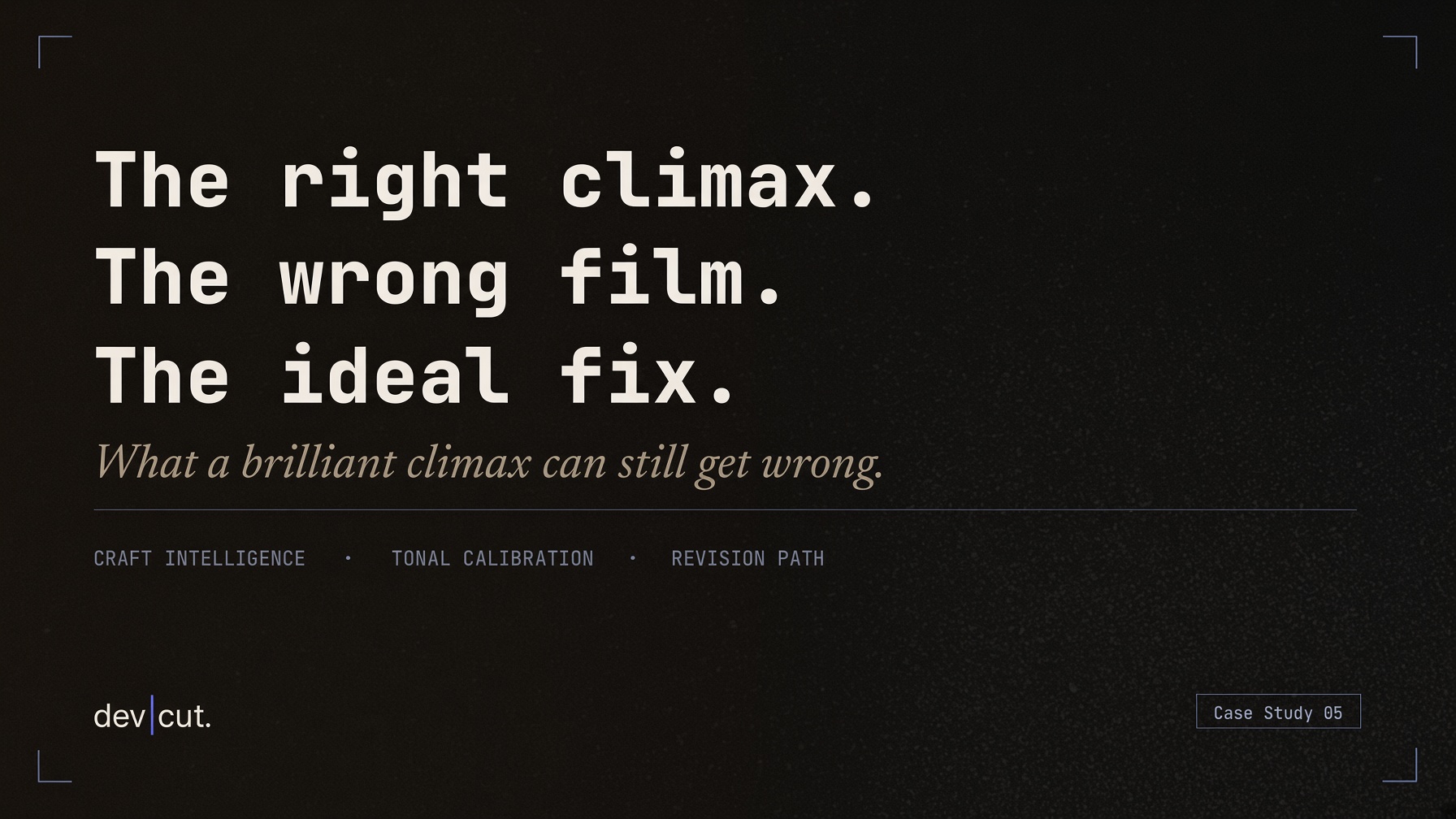 Case Study 05
Your Third Act Is Excellent — And That’s The Problem
August 19, 2026
Sky Crystal's crime-comedy Best Day Ever earned a Final Polish verdict and Strong buyer fit — but its brilliant climax belonged, in register, to a different film. The finding, and the three ways to fix it without touching what makes the ending work.
Read →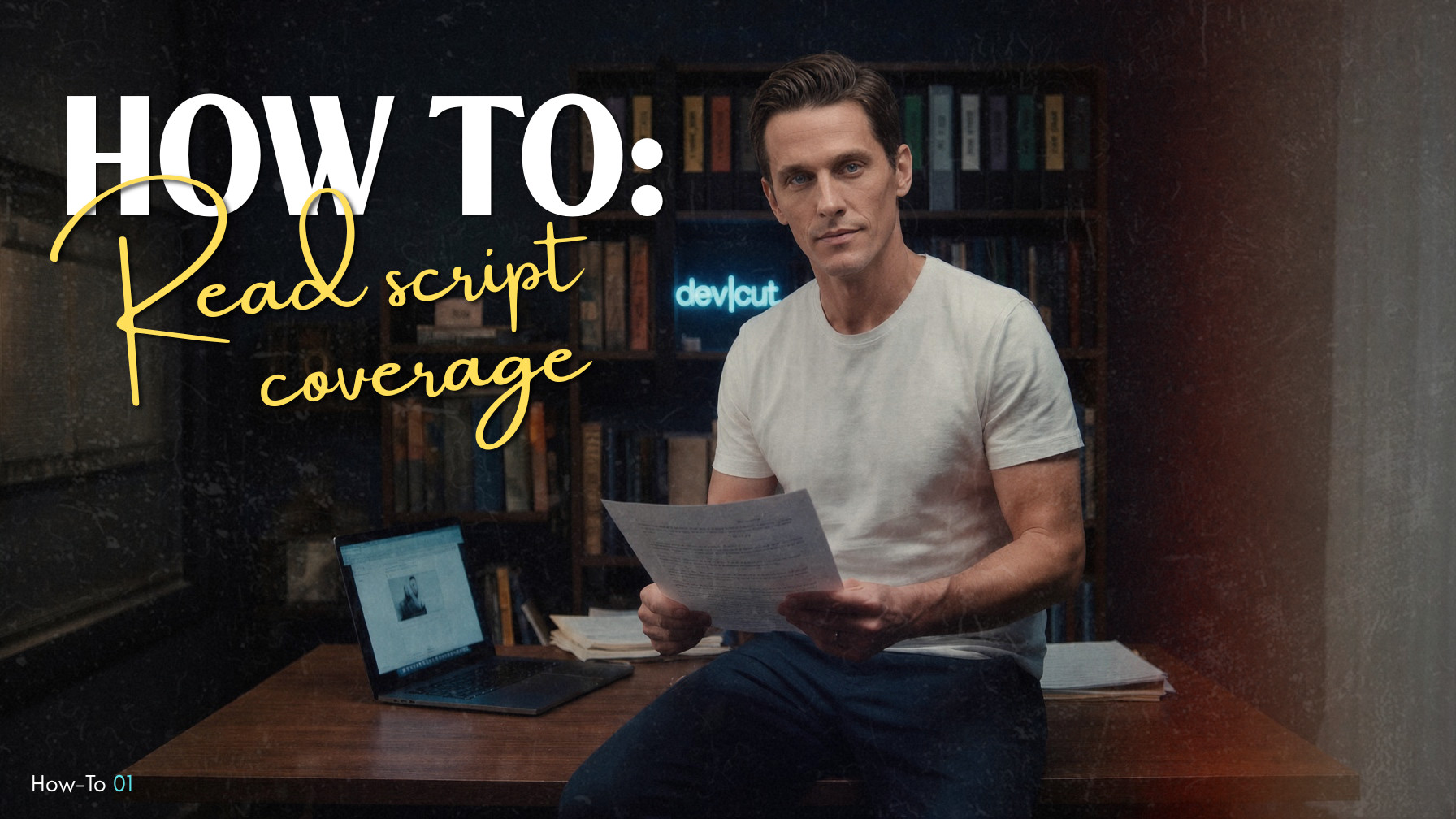 How-To
How to Read Script Coverage (And What to Actually Do With It)
August 17, 2026
A coverage report isn't a grade — it's one reader's structured opinion, and it's only useful if you know how to read it. A working reader's honest guide to what Pass, Consider, and Recommend actually mean, how to read a weakness note like a diagnosis instead of a sentence, and what to actually do once you've read the thing.
Read →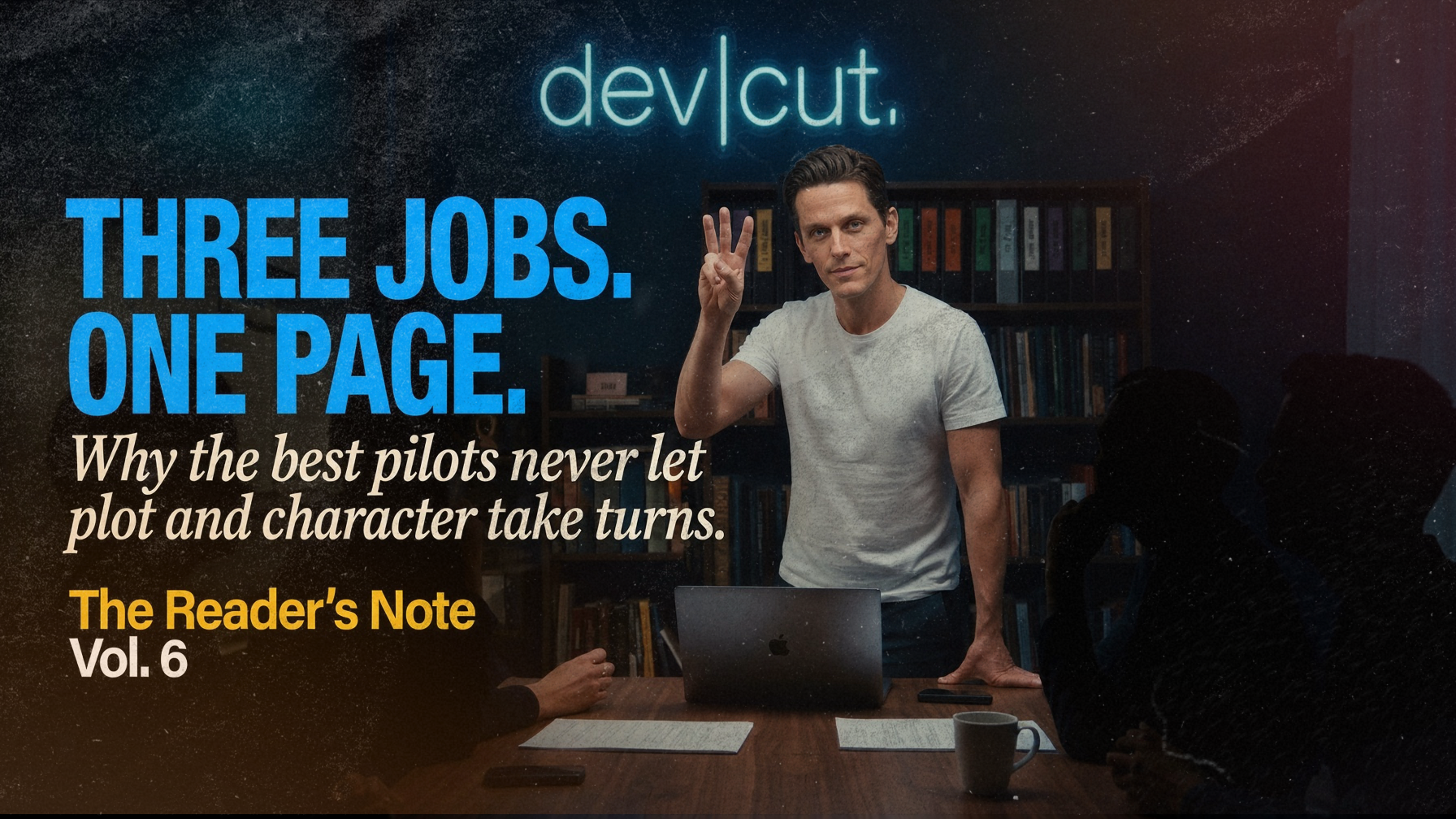 The Reader's Note · Vol. 06
The 3-for-1 Trick Behind TV's Best Pilots
August 12, 2026
The best pilots have one conceit doing three jobs at once — fusing structure, character, and marketing into a single stroke. Here's the durability test that separates a pilot that opens strong from one that runs five seasons, and why it matters whether you're writing the script or optioning it.
Read →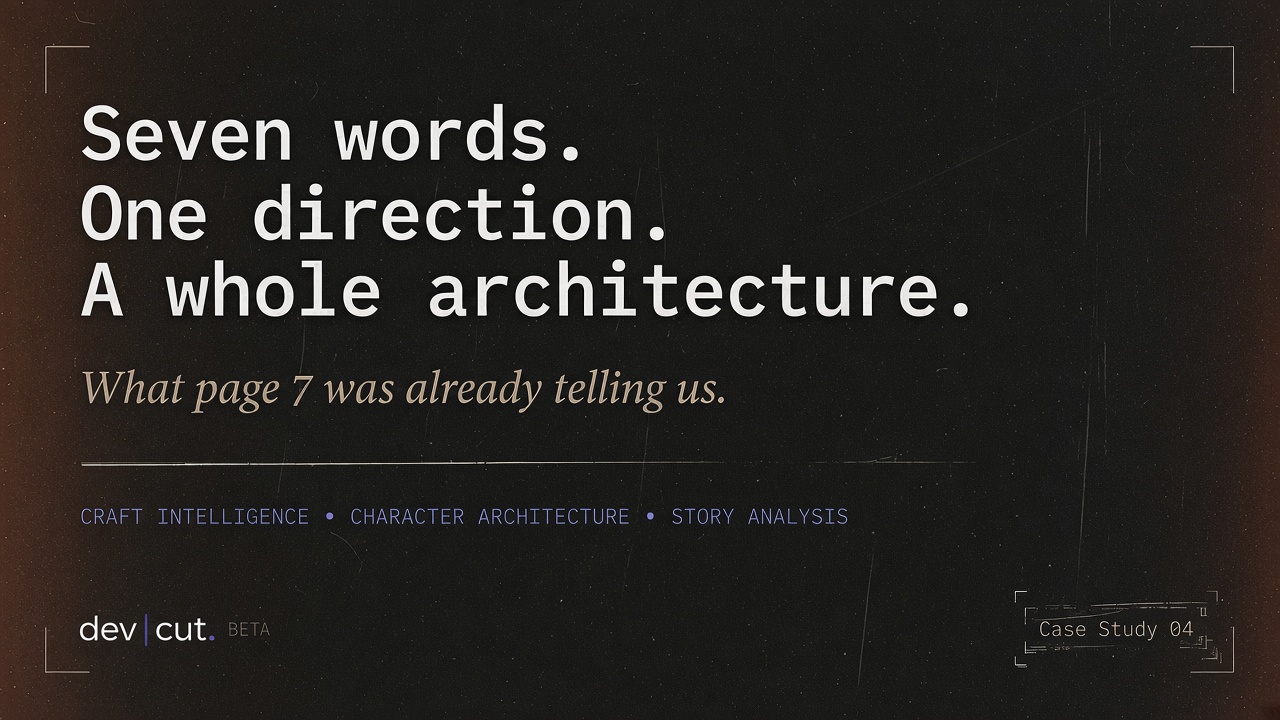 Case Study 04
A Mic Drop In Character Building
August 7, 2026
A TV pilot from writer Angie Wang, put through dev|cut. coverage like any other beta script. The finding: a single seven-word parenthetical on page 7 doing more character work than pages of exposition could — the smallest unit of stage direction a script can offer, carrying the most weight.
Read →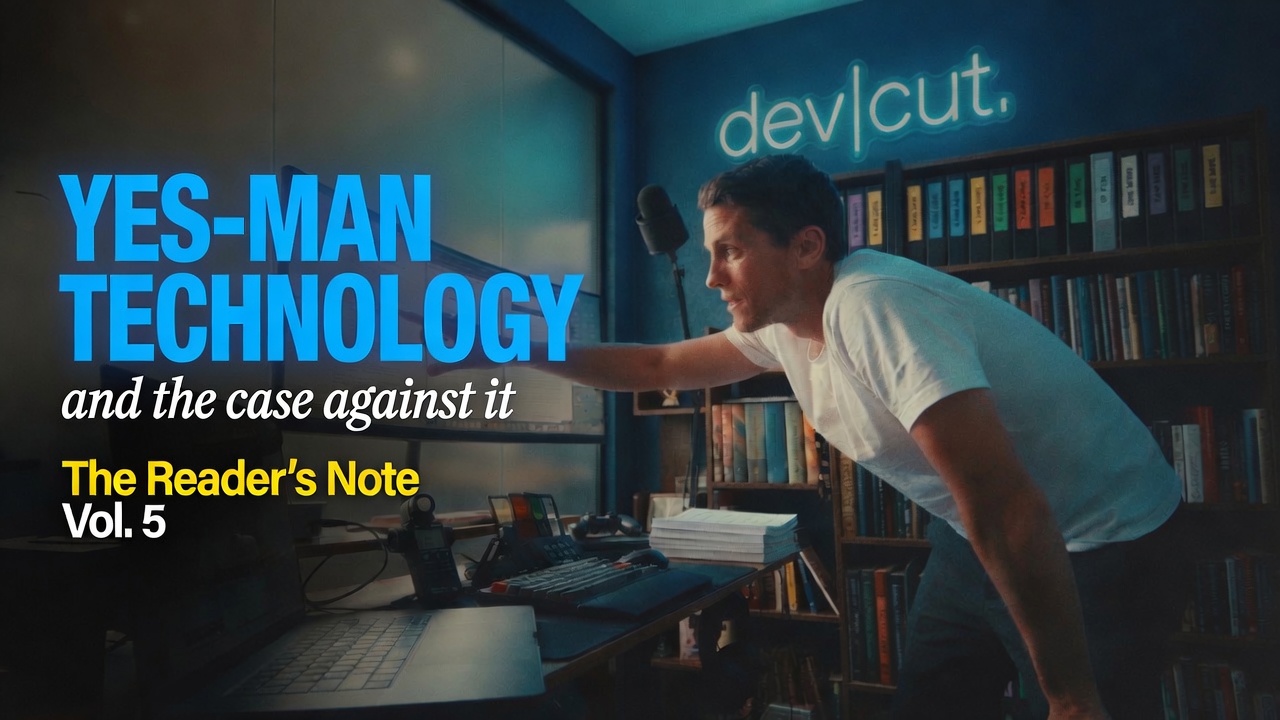 The Reader's Note · Vol. 05
Yes-man technology, and the case against it.
July 29, 2026
There's a version of the "AI coverage is garbage" argument that's actually right — most of it really is yes-man technology, built to keep you subscribed, not to tell you the truth. Here's the honest version: what AI is genuinely good for in a coverage process, what it isn't, and why the fix was never a technology problem in the first place.
Read →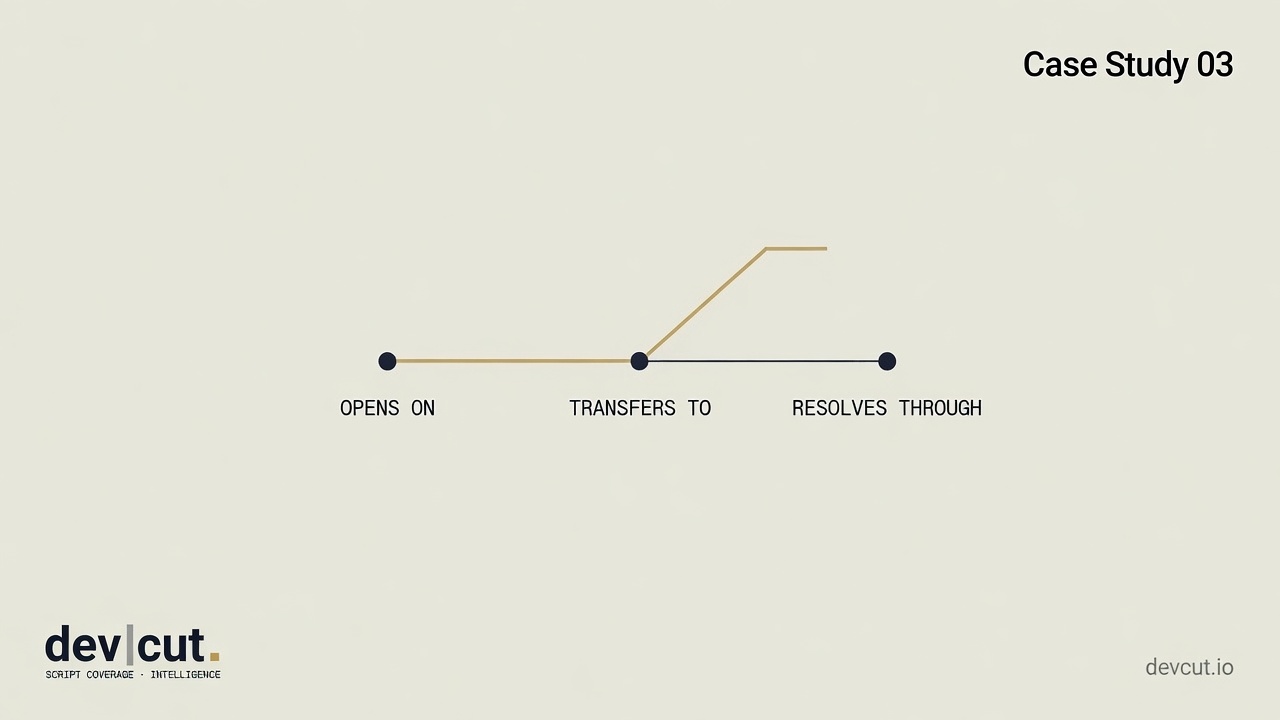 Case Study 03
Who is this story actually about from beginning to end?
July 22, 2026
A feature co-written with Michelle Jubilee Gonzalez — think Hunger Games meets Rollerball — went through dev|cut. coverage like any other beta script. The finding: the opening hands the story to one character, the ending resolves it through someone else entirely.
Read →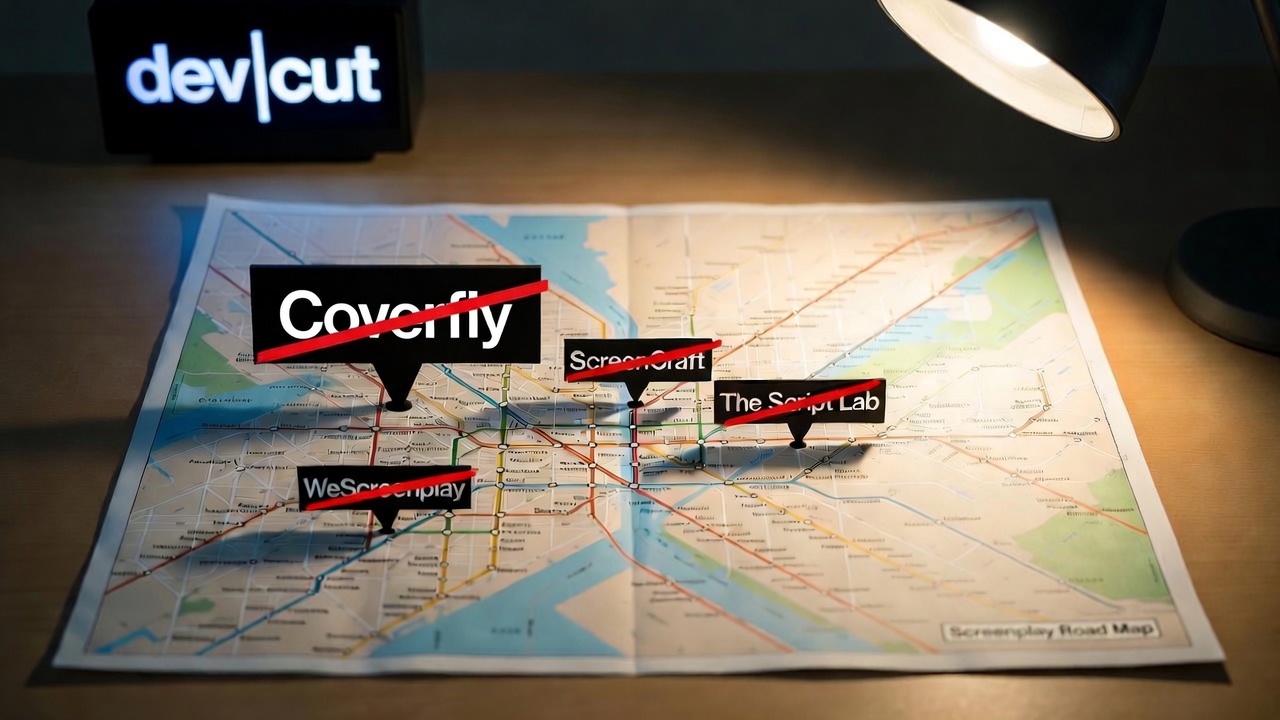 The Reader's Note · Vol. 04
Screenwriters are at a crossroads. Where's the map?
July 15, 2026
In 2025, the road map a lot of screenwriters used to navigate coverage and submissions quietly folded — Coverfly, ScreenCraft, WeScreenplay, The Script Lab, all gone within months of each other. What got lost wasn't just contests; it was the aggregated signal layer nobody's replaced. Here's the honest map of where working writers should actually look next.
Read → The Reader's Note · Vol. 03
Your lead is a passenger. And that could cost you.
July 1, 2026
You're a reader. Tuesday morning. Page 42 of a pilot with sharp writing, a specific world, dialogue that reveals more than it says. And somewhere in a late Act 3 twist, it hits you: the lead hasn't made a meaningful choice in twenty pages. That's the reactive protagonist — and it's the note that changes everything.
Read →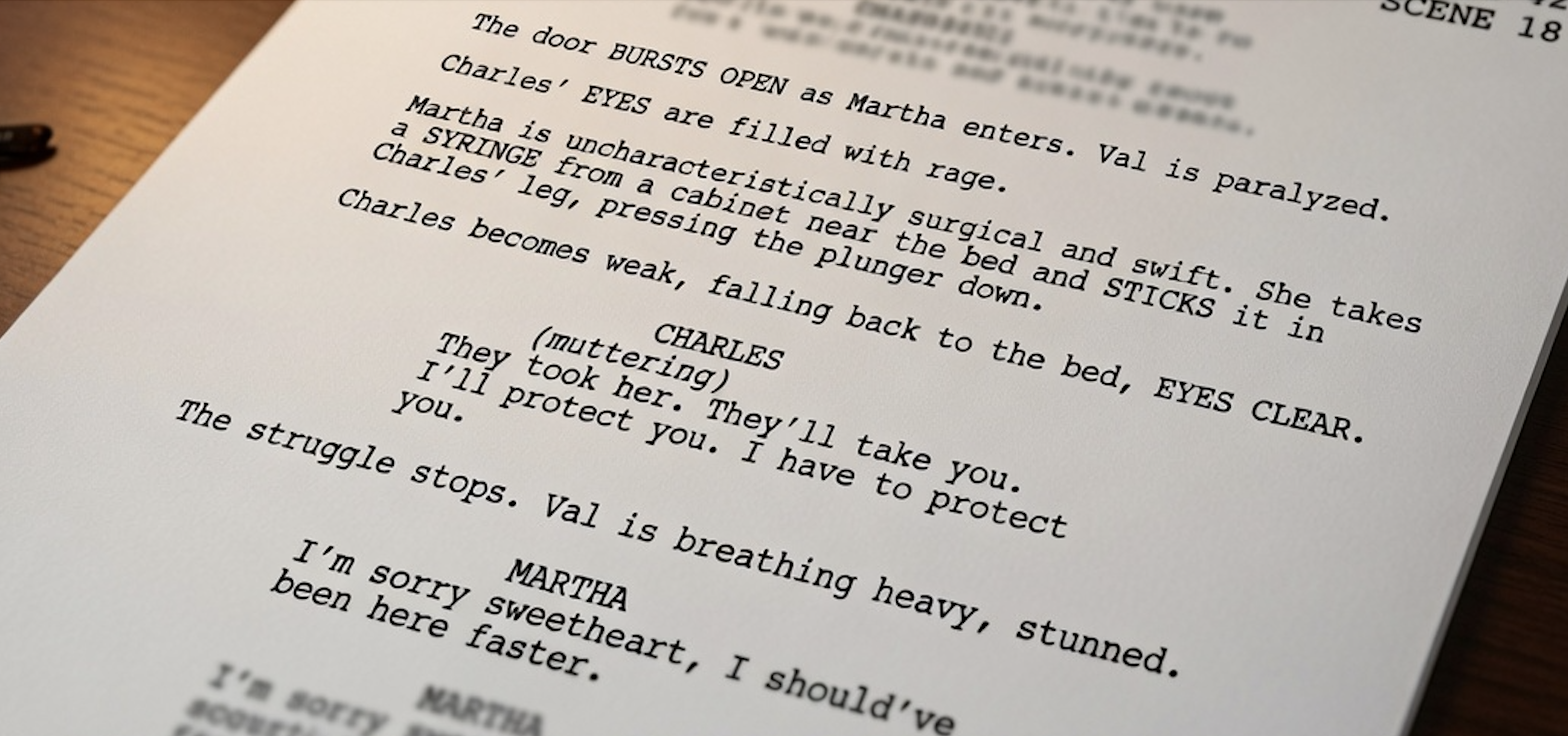 Case Study 02
The loaded gun the pilot forgot to fire.
June 30, 2026
A period thriller TV pilot. A housekeeper enters Act One with the calm of someone who has done this before. When she tucks a blanket over a sleeping figure, she tucks it like a coroner on a corpse. The setup was precise. The audience leaned in. And then she disappeared for the rest of the episode.
Read → The Reader's Note · Vol. 02
You know your story, your characters, your script better than anyone. That's the problem.
June 18, 2026
Somewhere around page thirty of a confident, well-crafted sci-fi thriller, I realize I haven't felt anything yet. Not because the writing is bad — it's better than most. The problem is what the writer was carrying that wasn't on the page. The intimacy problem. Vince Gilligan nearly made a colossal mistake because of it.
Read →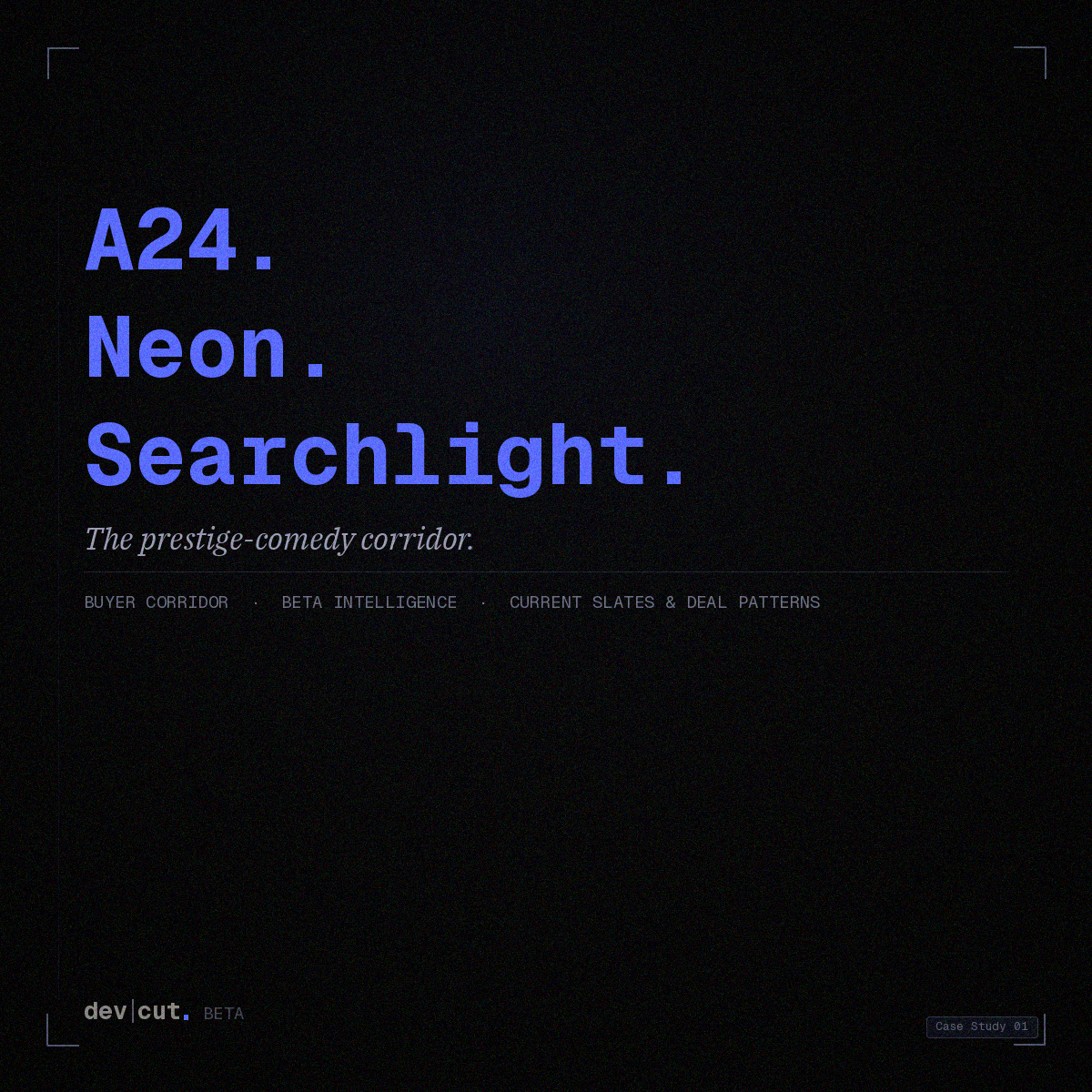 Case Study 01
The buyer corridor your coverage never gave you.
June 2, 2026
A crime comedy feature — think a modern Grosse Pointe Blank. The craft was there. But the finding that mattered wasn't about craft. It was about the where. dev|cut. coverage identified the buyer corridor: A24. Neon. Searchlight. Not a guess — a read of current slates and recent acquisition patterns.
Read → The Reader's Note · Vol. 01
I covered 6 scripts this month. Here's the pattern I couldn't ignore.
May 28, 2026
Six scripts. Four features, two pilots. Reading back-to-back does something to pattern recognition — by the fifth and sixth, I stopped reacting to individual problems and started seeing the shape underneath them. This month the shape was unmistakable. Not one problem. Three.
Read →