 How-To
How to Write Subtext
October 26, 2026
Dialogue that says exactly what a character means is usually the weakest dialogue on the page. How to build subtext without going vague, plus a one-question test you can run on any line.
Read →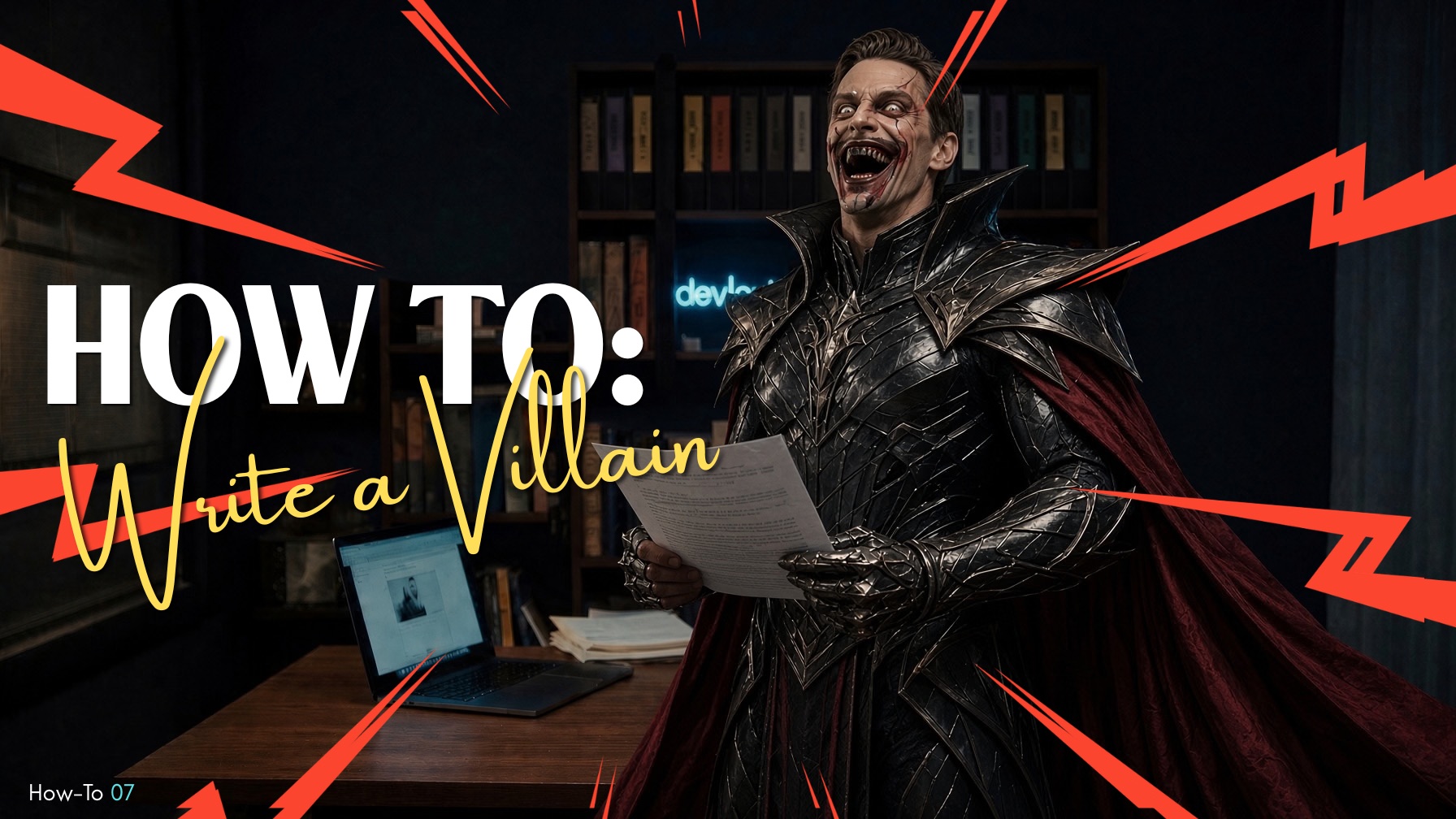 How-To
How to Write a Villain Who Isn’t Just an Obstacle
October 5, 2026
A villain who only exists to be beaten is easy to replace. A framework for giving your antagonist a want of their own, plus the Tuesday Test to run on yours.
Read → How-To
How to Handle a Note You Disagree With
September 28, 2026
Not every note is right for your story, and not every gut reaction against one is either. A framework for telling a real problem from personal taste, plus a two-step test for knowing which is which.
Read →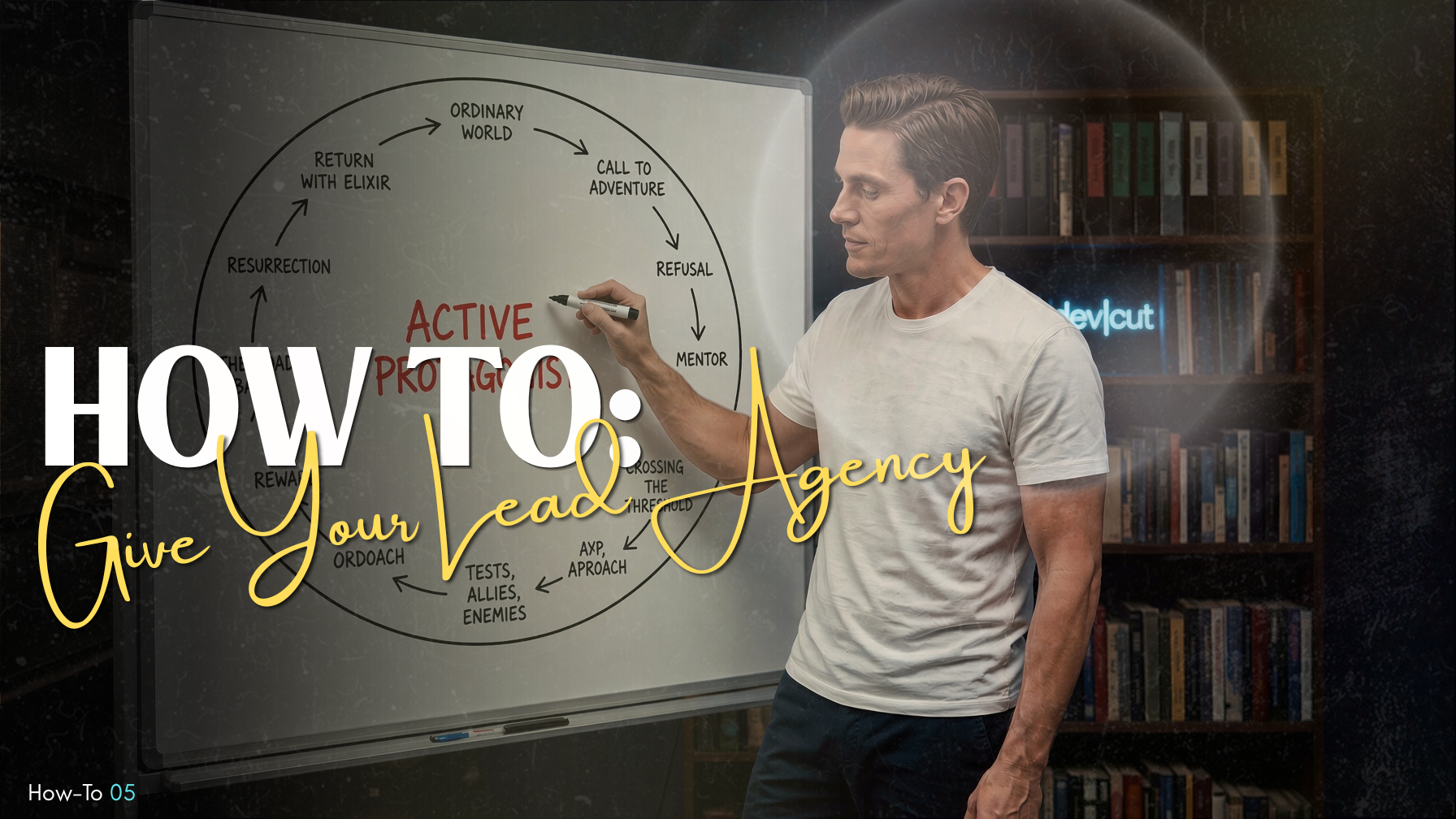 How-To
How to Give Your Lead Agency
September 21, 2026
A script can be structurally sound and still feel passive. The difference between a lead who reacts and a lead who drives the story, and a quick test to check which one you've written.
Read →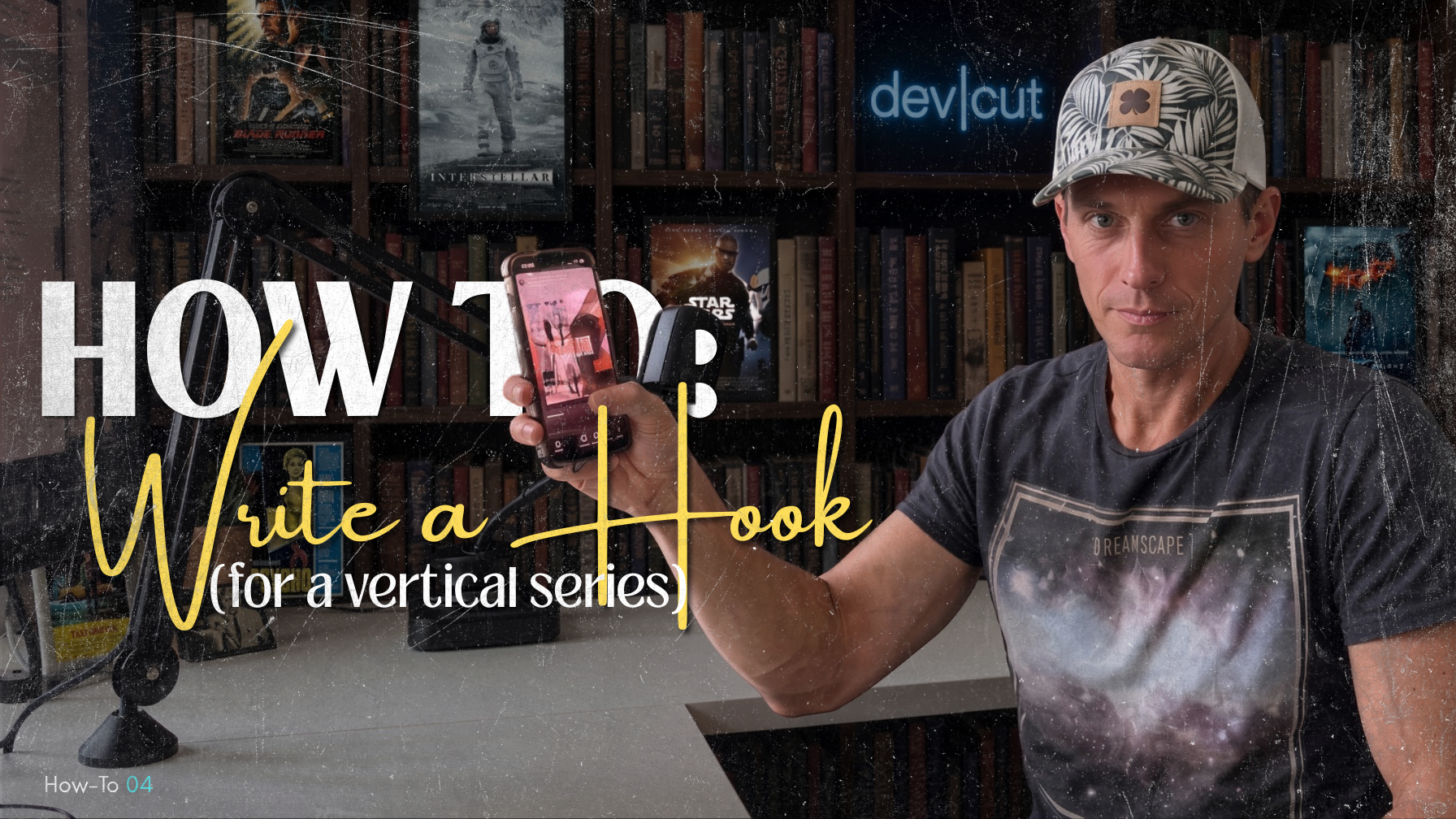 How-To
How to Write a Vertical Series Hook (Every Second Counts)
September 14, 2026
Vertical viewers swipe fast, so what makes them stop? The difference between a hook and a jolt, the two failure modes almost every vertical opening falls into, and the one-sentence test that works whether you're writing verticals, pilots, or features.
Read →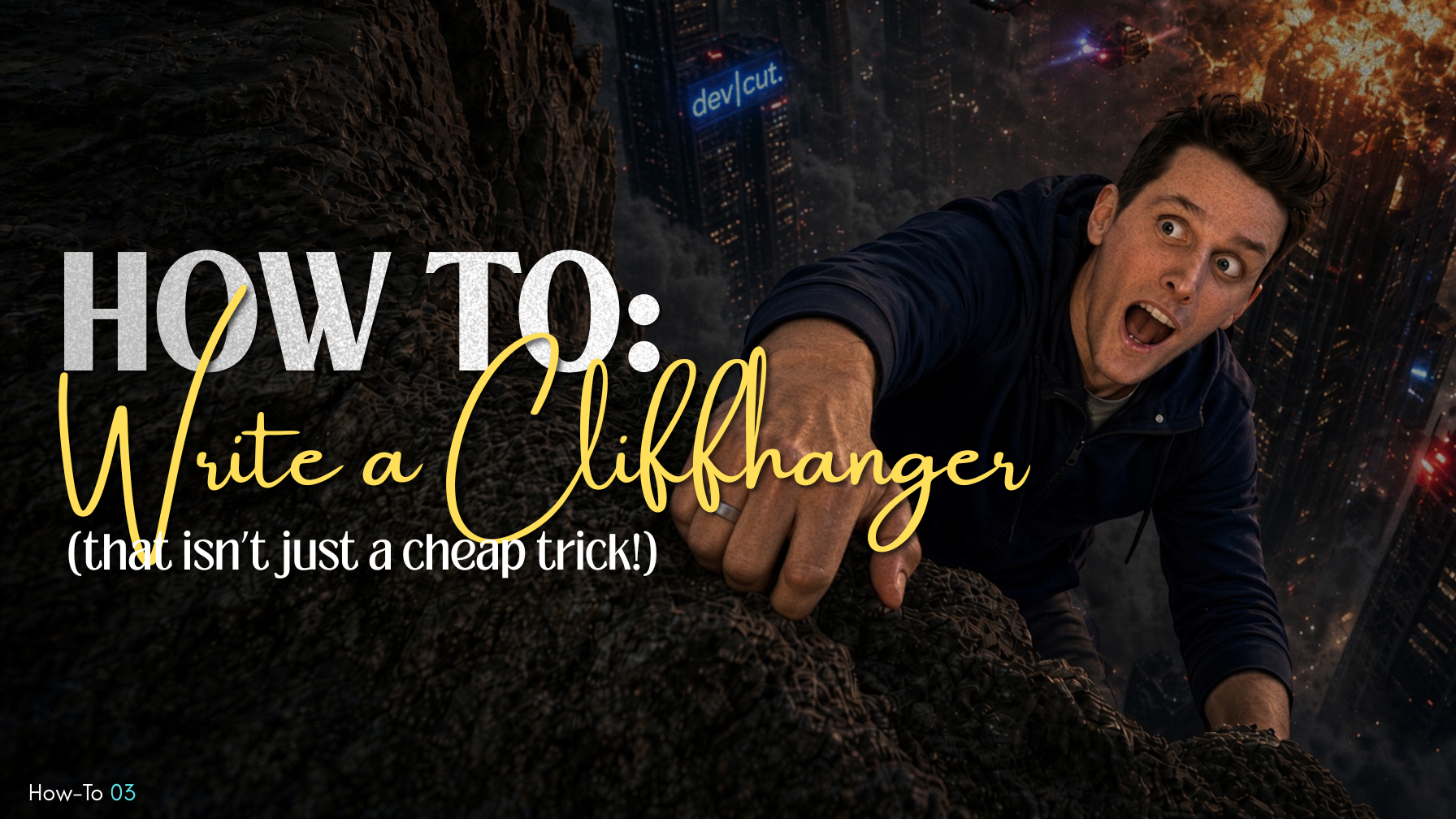 How-To
How to Write a Cliffhanger (That Isn't Just a Cheap Trick)
September 7, 2026
A lot of cliffhangers are like a jump-scare, cheap thrills that get forgotten — the bet a real cliffhanger makes with the audience, the three kinds most scripts only use one of, and the mistake that undoes a good ending in the first thirty seconds of the next scene.
Read → How-To
How to Tell the Difference Between a Note and an Opinion
August 24, 2026
Not every note in your coverage deserves the same response. A practical framework for sorting real script notes from one reader's personal taste — three questions to run any note through, and what to do when it's genuinely both.
Read → How-To
How to Read Script Coverage (And What to Actually Do With It)
August 17, 2026
A coverage report isn't a grade — it's one reader's structured opinion, and it's only useful if you know how to read it. A working reader's honest guide to what Pass, Consider, and Recommend actually mean, how to read a weakness note like a diagnosis instead of a sentence, and what to actually do once you've read the thing.
Read →