 Case Study 09
Revision Is a Decision: What a Second Pass Shows About Taking Notes
October 21, 2026
Most writers see their notes once. This case study follows one script through two rounds of coverage: 28 pages cut, a verdict that moved up a full tier, and one note that never moved at all. What a second pass shows about revision.
Read → Case Study 08
Hidden Protagonist: Can a Film Survive Too Big a Secret?
September 30, 2026
A holiday slasher comedy conceals its protagonist’s identity for most of Act Two — a clever bet that can leave an audience with no one to hold onto. The finding on what a concealed-protagonist design still owes the middle of a story.
Read → Case Study 07
Down Is Safety: Can Direction Alone Carry a Theme?
September 16, 2026
A survival thriller inverts almost every instinct an audience carries in: down is safety, up is danger. No character explains it. The finding on how a spatial device alone carried the entire theme.
Read → Case Study 06
Assembled vs. Inevitable: What’s Your Reveal?
September 2, 2026
Every reveal is either assembled or inevitable: same information, completely different experience. The finding on Wash Will Tell’s Act 3, and the one-lever fix that moved it from one to the other.
Read → Case Study 05
Your Third Act Is Excellent — And That’s The Problem
August 19, 2026
Sky Crystal's crime-comedy Best Day Ever earned a Final Polish verdict and Strong buyer fit — but its brilliant climax belonged, in register, to a different film. The finding, and the three ways to fix it without touching what makes the ending work.
Read → Case Study 04
A Mic Drop In Character Building
August 7, 2026
A TV pilot from writer Angie Wang, put through dev|cut. coverage like any other beta script. The finding: a single seven-word parenthetical on page 7 doing more character work than pages of exposition could — the smallest unit of stage direction a script can offer, carrying the most weight.
Read →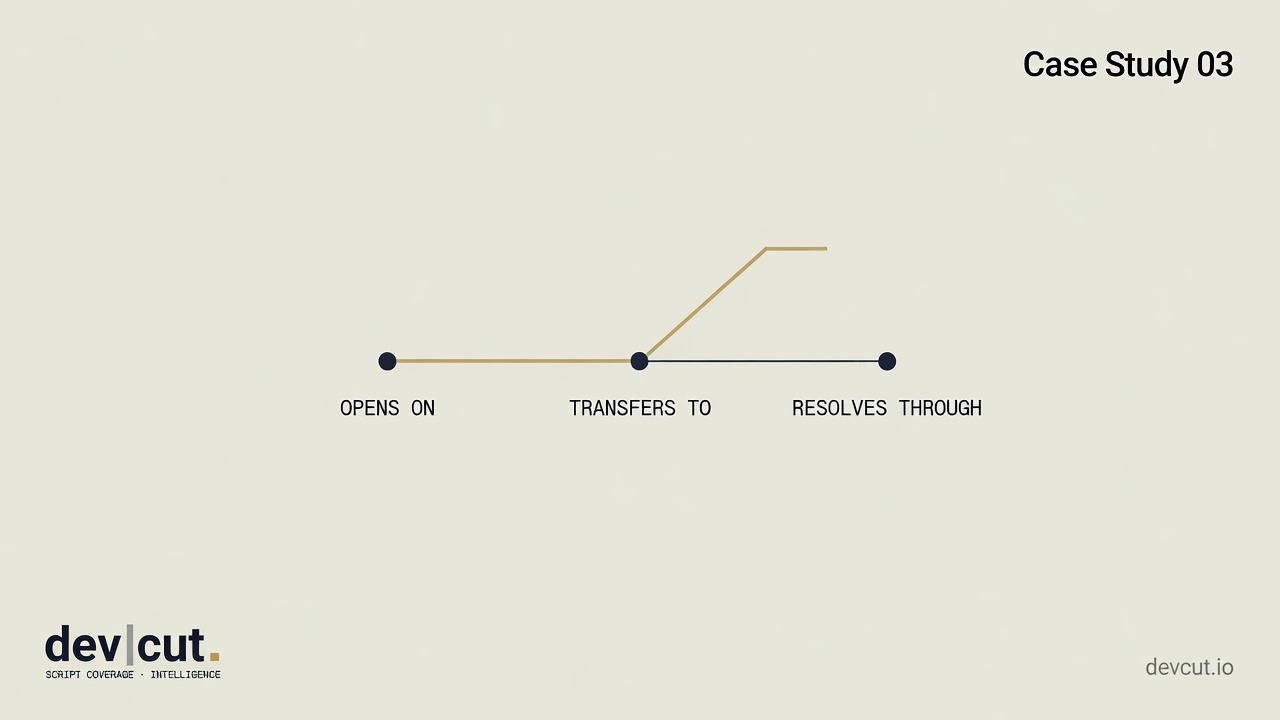 Case Study 03
Who is this story actually about from beginning to end?
July 22, 2026
A feature co-written with Michelle Jubilee Gonzalez — think Hunger Games meets Rollerball — went through dev|cut. coverage like any other beta script. The finding: the opening hands the story to one character, the ending resolves it through someone else entirely.
Read →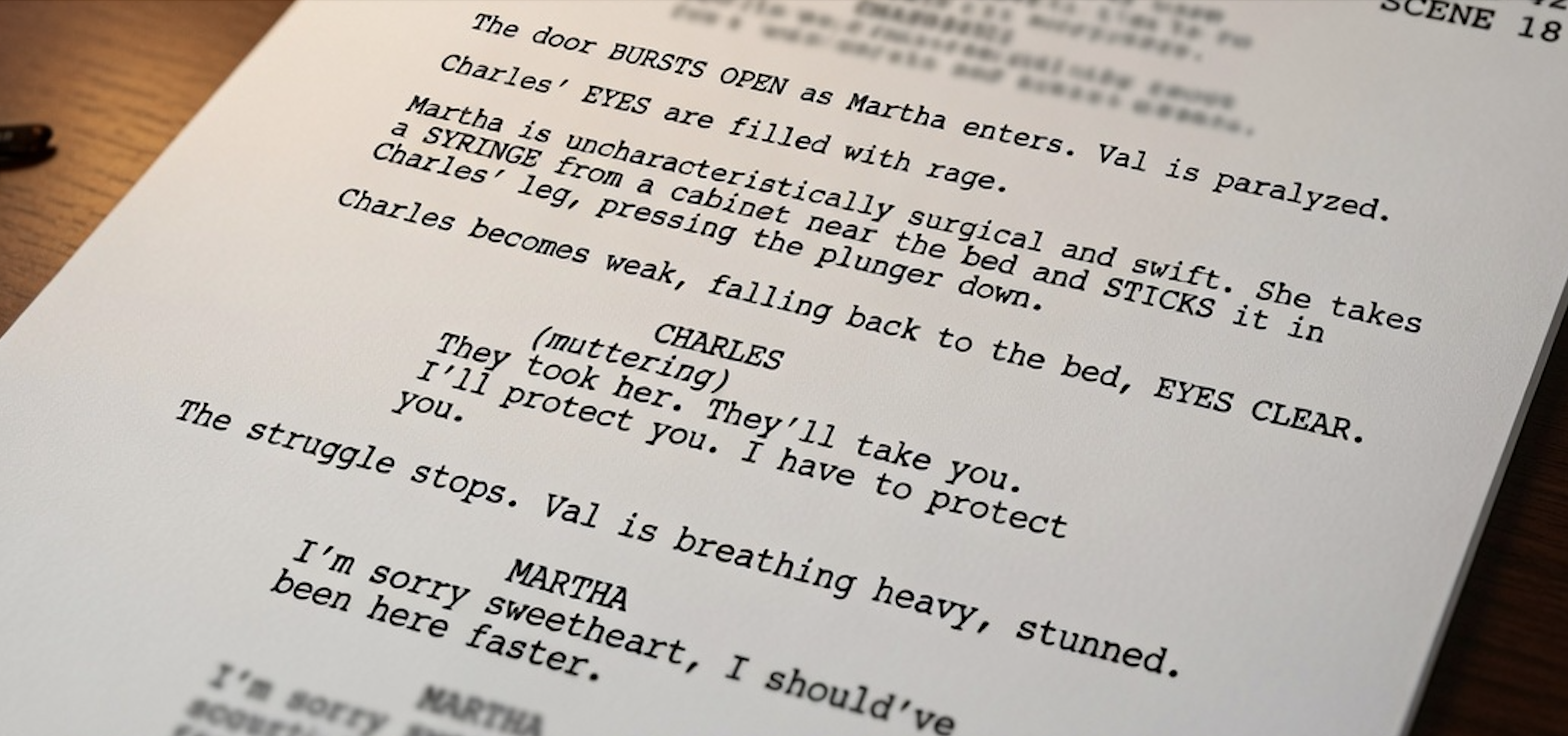 Case Study 02
The loaded gun the pilot forgot to fire.
June 30, 2026
A period thriller TV pilot. A housekeeper enters Act One with the calm of someone who has done this before. When she tucks a blanket over a sleeping figure, she tucks it like a coroner on a corpse. The setup was precise. The audience leaned in. And then she disappeared for the rest of the episode.
Read → Case Study 01
The buyer corridor your coverage never gave you.
June 2, 2026
A crime comedy feature — think a modern Grosse Pointe Blank. The craft was there. But the finding that mattered wasn't about craft. It was about the where. dev|cut. coverage identified the buyer corridor: A24. Neon. Searchlight. Not a guess — a read of current slates and recent acquisition patterns.
Read →