Screenwriters are at a crossroads. Where's the map?
A reader's note on the loss of platforms like Coverfly — what nobody's replaced, and where working writers should look next.
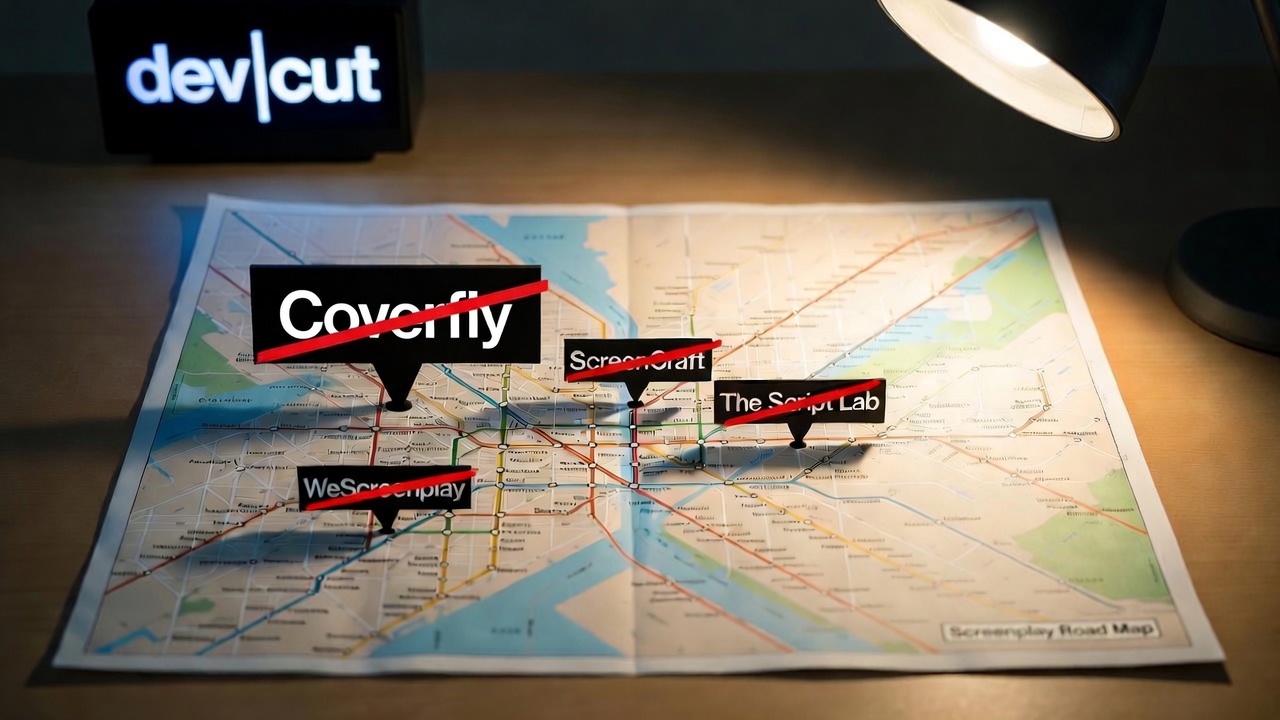
Without Coverfly, where do writers go next?
In 2025, the road map a lot of screenwriters used to navigate the coverage and submission landscape quietly folded.
Coverfly. If you're not familiar, Coverfly was a platform that had become, for many working writers, the central hub for coverage tracking, contest submissions, and a kind of informal reputation currency. Last August, they announced it was shutting down.
And they weren't the first. ScreenCraft, WeScreenplay, The Script Lab — all gone earlier that year, and suddenly several of the platforms writers leaned on most were alpha-michael-foxtrot.
The consolidation was so fast, it was disorienting. And it has left behind one simple question that's harder to answer than it sounds: where do writers go now?
Over the last 12 months, I've been asked this question a lot. A lot a lot. From working writers I rate highly. From writers prepping their first submission. From people who'd built their entire submission strategy around tools that no longer exist.
Personally, I don't think there's one categorical answer saying “go here, obviously.” But I do have an answer… and it starts with being clear about what was actually lost.
What Coverfly Was Actually Providing
Coverfly's core value wasn't contests. It was aggregation and signal.
For writers: It was a place to understand where a script stood. Not just did it ‘place’ in some contest, but did it resonate with readers who were tracking quality across submissions. The X-Factor score (yes, a real thing), whatever its actual precision, gave writers a unified metric across multiple evaluators. Imperfect, sure, but it existed.
For the industry: It was, at least in theory, a discovery layer. A filtered pool of scripts that had moved through enough evaluation to be worth a second look. The kind of signal that's hard to manufacture and easy to lose.
What the consolidation took wasn't just submission pipelines. It was a credentialing layer for unrepresented writers. It removed one of the few legitimate ways to build a track record without having a track record to begin with. It, in a way, circumvented the crushing catch 22 of our industry.
What's missing most is accessible, serious coverage. Coverage that reads like a development exec thinks, not a grading rubric. The Reader's Note, Vol. 4
What Replaced It — And What Didn't
The honest assessment of the current landscape is that alternatives do exist, but the replacement isn't clean.
Stage 32 absorbed significant contest demand. The Black List remains the gold standard for script hosting and professional exposure, though its price point and reader quality variance are both real considerations. The Academy Nicholl, PAGE Awards, and a handful of independent contests continue operating with genuine industry credibility.
Industry Arts, the parent company behind Coverfly, ScreenCraft, WeScreenplay, and The Script Lab, has reportedly been working on a consolidated replacement of its own. As of this writing, nothing has launched. It's been almost a year since the last of the shutdowns. That's not a knock on the effort. Folding five different functions into one platform is a real undertaking. However, it does mean this isn't a gap writers just have to wait out. It's the current state of the market.
What nobody replaced is the aggregated signal layer. That unified view of a script's trajectory across evaluators. Gone. Like Amy Elliott-Dunne from a rocky marriage.
And what's missing most is accessible, serious coverage. Coverage that reads like a development exec thinks, not a grading rubric.
The dirty secret of professional script coverage has always been price. A single serious read from a reputable reader — not a template, not a rushed report, not a machine with a byline — has historically run $150 to $400 depending on the service and format. For a writer with multiple scripts, at multiple stages, across multiple drafts… that math gets brutal fast.
The kind of writers that the coverage industry was theoretically built to serve has always been the ones that are working purely on passion, not a WGA pay check; emerging writers, unrepresented writers, writers outside the LA/New York corridor.
Now, let's be honest. I'm not saying Coverfly solved this. Anyone who has done submissions knows you pay to play. But their ecosystem made it easier to route around it. You could build credibility and talent-signal through contests and avoid paying for multiple individual reads. Without it, that path just got significantly harder.
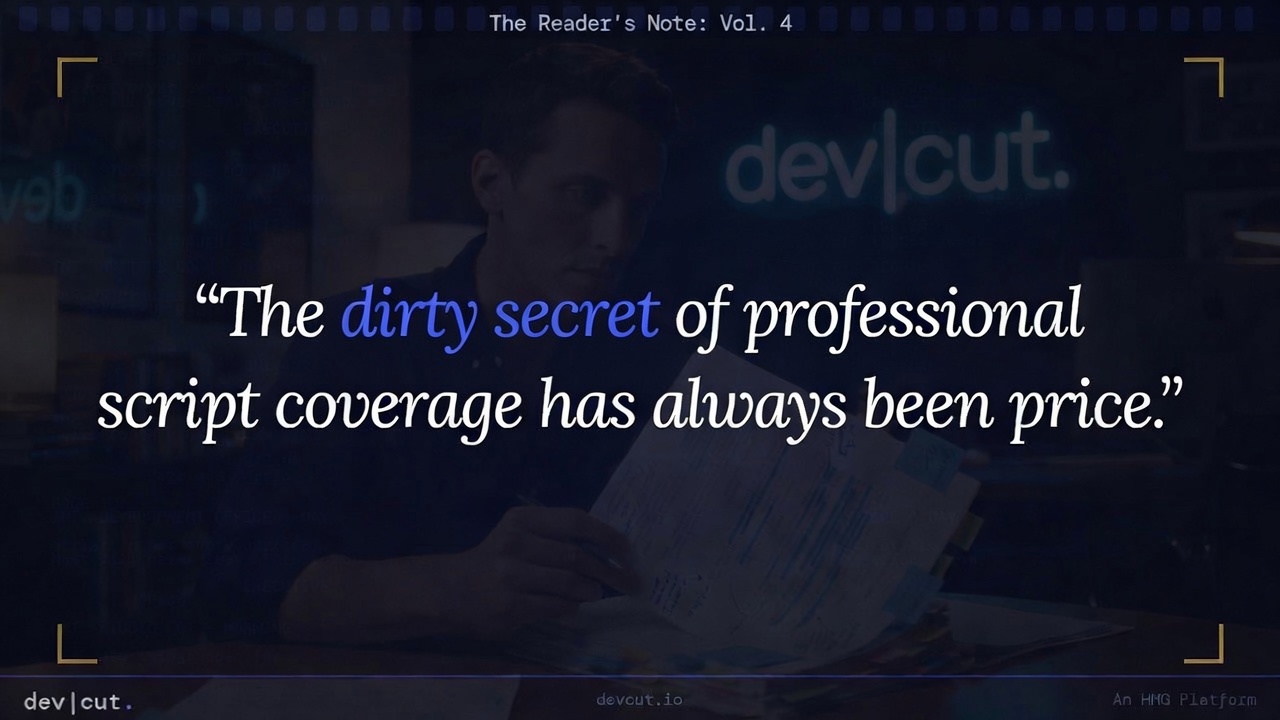
In traditional script coverage: No money = Mo problems.
What Good Coverage Actually Looks Like
Before I suggest where writers should go, it's worth being direct about what to look for. Or at least, what I look for. Because the market is flooded right now with services trying to fill that script coverage service gap, and not all of them are filling it well.
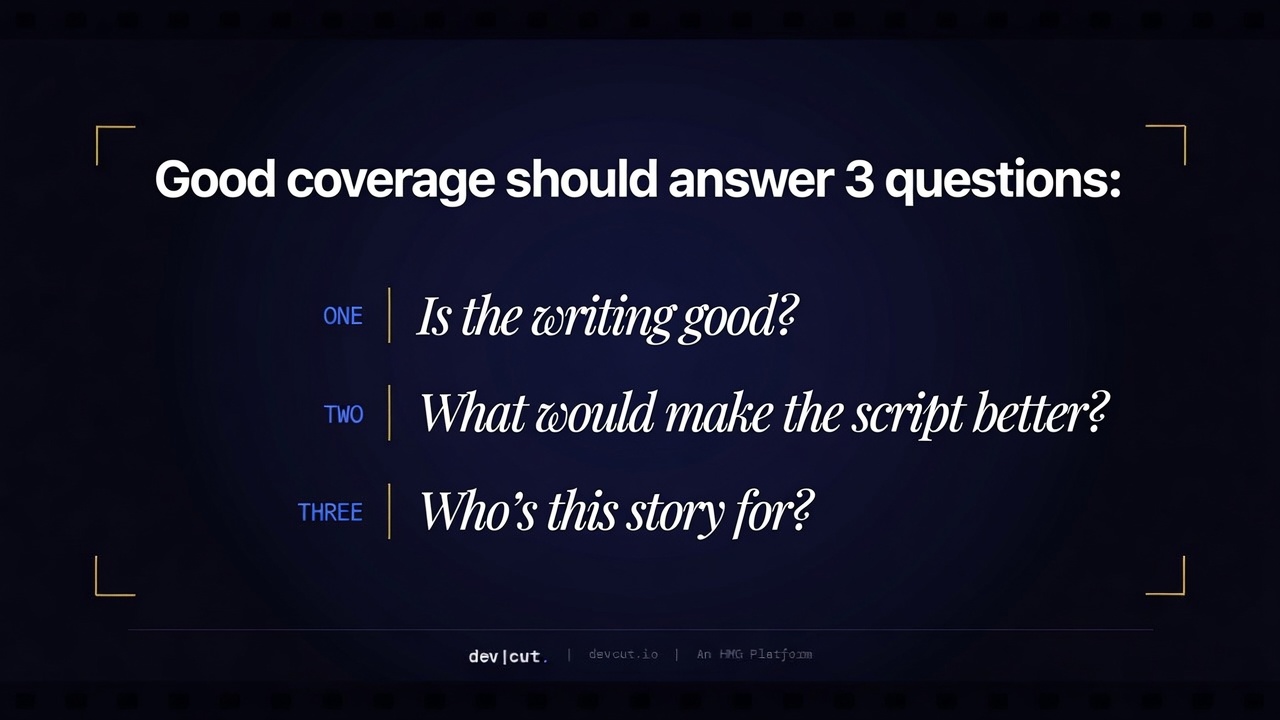
Good coverage answers three questions, not one.
Most coverage, at almost any price point, answers the first: is the writing good? Structure, dialogue, character, pace. The craft dimensions. Necessary. Not sufficient.
The second question is the one most coverage, especially the AI fast-first model, skips: what, specifically, would make it better? Key word: specifically. Not “the second act sags” — which page, which scene, which choice, and what the actual fix looks like. A grade tells a writer where they stand. It doesn't tell them what to do Monday morning. The coverage worth paying for is a map to a better draft, not just an assessment of the one you handed in.
The third question is: good for whom?
A script can be genuinely well-crafted and go nowhere, because nobody in the room can name the audience, or (and often more importantly) the buyer/platform. I've seen this on both sides of the development table. On one hand you have scripts that read as fantastic, earned real consideration, and ultimately stalled because the fit was never clear-cut. And I've seen the other side of that coin: the script was solid, nothing Earth-shattering, but they moved quickly because the room could say, with confidence, “this is exactly what this company is looking for right now.”
Buyer-fit assessment isn't about predicting who will buy a script. Let's be real, nobody can do that. It's about reading a script against real buyer patterns; current slates, recent deals, the actual appetite in the market right now. Then, giving a writer the clearest possible picture of the landscape their work is entering. Not a guess. A read. You can see one worked through end to end in the buyer corridor case study.
The coverage reality.
Almost no coverage service attempts all three seriously. Most stop at the first. The ones that add real buyer-fit tend to cost several hundred per read and still leave the second question, the actual path to a better draft, undone.
The Honest Map
For the practical, no-eulogy version of this — what to actually do right now — see Coverfly, ScreenCraft, and WeScreenplay Are Gone. Here's Where Screenwriters Are Going Now., a Writer's Map guide on the same closures.
Here's where writers should actually be looking:
If contest track record is your goal: The Black List for hosting and professional exposure. Nicholl for prestige and genuine industry attention (side note: their deadline is July 20 this year, if you're in the window). PAGE if you're in the midrange. Find two or three competitions with real reader credibility in your genre and rotate through them. Don't chase volume!
If coverage is your goal: Prioritize human readers over template services. Ask specifically whether the reader you'll be assigned has actual development experience. We're not talking just reading credits, but the experience of being in the room where decisions get made. Finally, ask what you'll actually walk away with: a grade, a scorecard, or a specific map of what to change and why. Development thinking and coverage thinking are different skills. The best readers have both.
If you're making decisions about what to submit and where: Don't skip the fit question. Before sending anything out, be able to name specifically who the audience is and even who the buyer is. Don't generalize with “this is for guys” or “would be great on a streaming platform” — go deeper. If you can't name them, that's your first revision target.
On affordability: Don't let price be the variable that determines whether you get a serious read. The gap between a $50 coverage service and a serious development read has always been significant. But the gap between a serious read and nothing, in my opinion, that's the one that can cost writers the most, and it costs them the most when they can least afford it.
The Read That's Worth Having
What I've learned from both sides, as a writer receiving notes and as someone who reads scripts to decide what to develop, is that the coverage worth having isn't a verdict. It's not a score. It's not a report card.
It's the read that tells you what a stranger sees when they open page one. The one that names what familiarity hides. The one that doesn't just identify the problem, it maps the way through it.
That's what we're building at dev|cut. Coverage that answers all three questions: is the writing good, what would make it better, and good for whom? Backed by a bespoke script-intelligence engine, working industry professionals, and shaped by actual development thinking. Not a rubric, not a template, not a machine with no context for what actually gets a script over the line.
Professional-level coverage shouldn't require a production company budget. We built dev|cut. because we think it's time for that to change.
dev|cut. is live now — founding rates locked through September 30. The Reader’s Note newsletter is where we’re building in the open — join if you want to follow along.
The Reader’s Note is free. If you found this useful, subscribe for weekly coverage thinking.
[Soon] The story continues... — Brian Hanford, Writer & Founder, dev|cut.™ · devcut.io
← Back to Blog