 The Reader's Note · Vol. 07
The Cold Open Is a Promise, Not a Trailer
August 27, 2026
Most cold opens are built as hooks — loud enough to buy an audience's attention before the title card. The best ones are doing something else entirely: making a promise the next 10 episodes have to keep. Here's the test for whether your opening is a thesis or just the best three pages you had, and why it matters whether you're writing the pilot or optioning it.
Read → The Reader's Note · Vol. 06
The 3-for-1 Trick Behind TV's Best Pilots
August 12, 2026
The best pilots have one conceit doing three jobs at once — fusing structure, character, and marketing into a single stroke. Here's the durability test that separates a pilot that opens strong from one that runs five seasons, and why it matters whether you're writing the script or optioning it.
Read → The Reader's Note · Vol. 05
Yes-man technology, and the case against it.
July 29, 2026
There's a version of the "AI coverage is garbage" argument that's actually right — most of it really is yes-man technology, built to keep you subscribed, not to tell you the truth. Here's the honest version: what AI is genuinely good for in a coverage process, what it isn't, and why the fix was never a technology problem in the first place.
Read →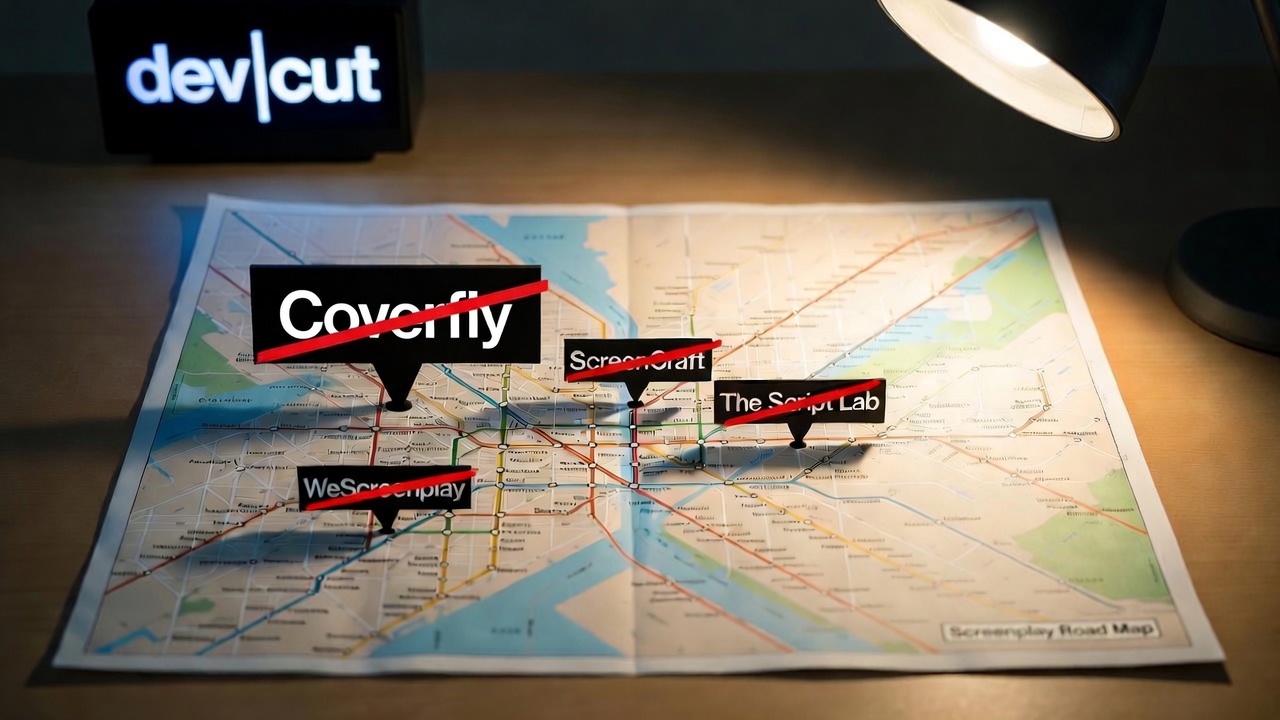 The Reader's Note · Vol. 04
Screenwriters are at a crossroads. Where's the map?
July 15, 2026
In 2025, the road map a lot of screenwriters used to navigate coverage and submissions quietly folded — Coverfly, ScreenCraft, WeScreenplay, The Script Lab, all gone within months of each other. What got lost wasn't just contests; it was the aggregated signal layer nobody's replaced. Here's the honest map of where working writers should actually look next.
Read → The Reader's Note · Vol. 03
Your lead is a passenger. And that could cost you.
July 1, 2026
You're a reader. Tuesday morning. Page 42 of a pilot with sharp writing, a specific world, dialogue that reveals more than it says. And somewhere in a late Act 3 twist, it hits you: the lead hasn't made a meaningful choice in twenty pages. That's the reactive protagonist — and it's the note that changes everything.
Read → The Reader's Note · Vol. 02
You know your story, your characters, your script better than anyone. That's the problem.
June 18, 2026
Somewhere around page thirty of a confident, well-crafted sci-fi thriller, I realize I haven't felt anything yet. Not because the writing is bad — it's better than most. The problem is what the writer was carrying that wasn't on the page. The intimacy problem. Vince Gilligan nearly made a colossal mistake because of it.
Read → The Reader's Note · Vol. 01
I covered 6 scripts this month. Here's the pattern I couldn't ignore.
May 28, 2026
Six scripts. Four features, two pilots. Reading back-to-back does something to pattern recognition — by the fifth and sixth, I stopped reacting to individual problems and started seeing the shape underneath them. This month the shape was unmistakable. Not one problem. Three.
Read →