How to Handle a Note You Disagree With
Not every note is right for your story, and not every objection to one is either. A framework for telling the difference, and a quick way to test whether it’s one to embrace or brush off.
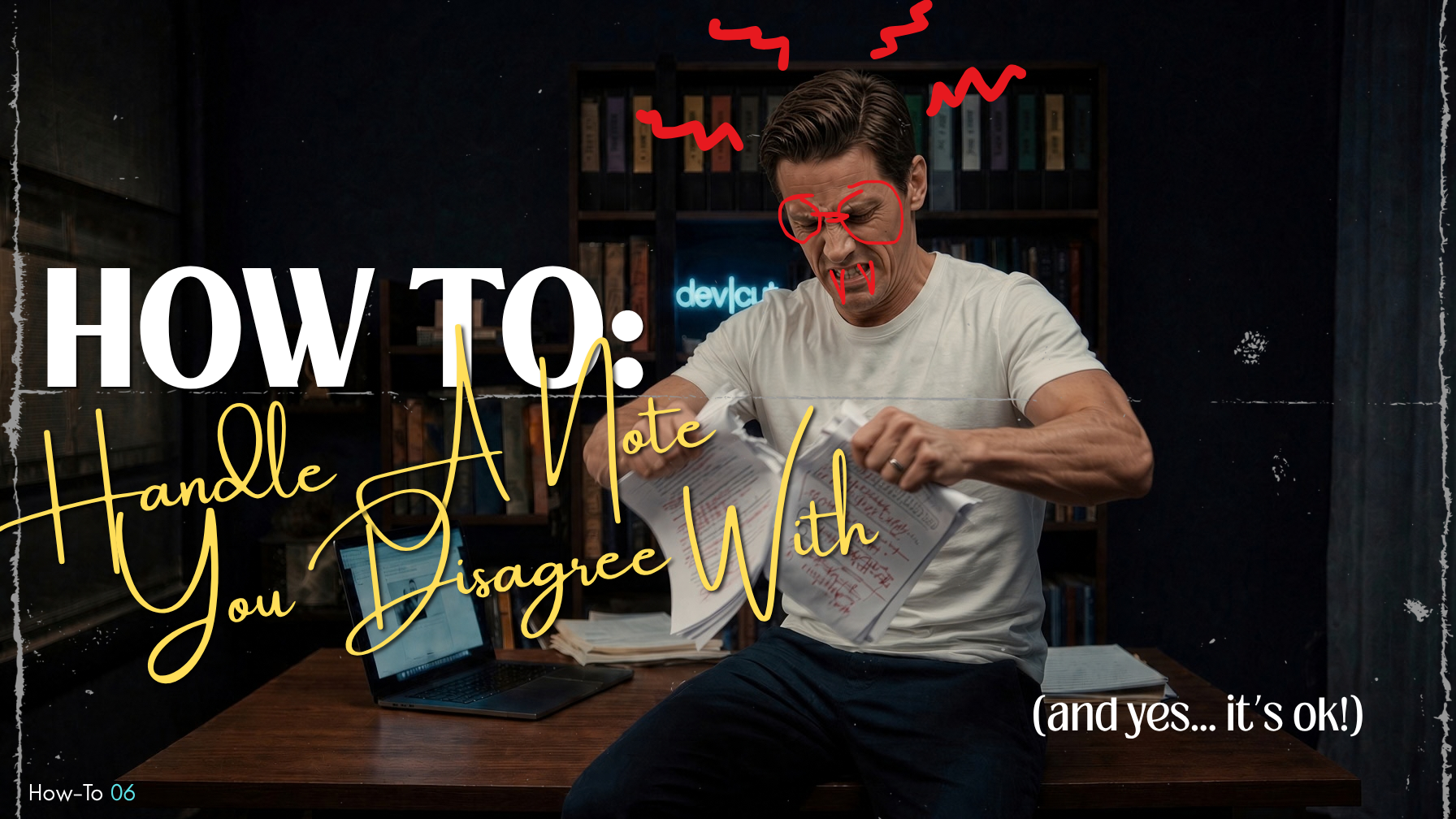
You send a script out, head into a development meeting, or sit down with a producer… and inevitably, a note comes back that you don’t agree with. Maybe it’s a small one. Maybe not. Maybe it’s the kind of note that touches your ending, your lead, or the scene you were proudest of. Either way, 99% of the time, the first thing that shows up in your brain sure as hell ain’t objective analysis. It’s a feeling, somewhere between defensiveness and dread, and it hits before you’ve had time to really think about whether the note is correct.
That feeling isn’t wrong, but it’s also not always helpful. It’s just what happens when someone points at something you put blood, sweat, and tears into. The real work starts after it passes, when you start to think about the note critically, analytically, and with a level head.
The two things that get confused for each other
Admiral Ackbar said it best… “It’s a trap!” And in taking notes, the same sentiment applies. There are two ways of looking at a note you disagree with:
“This note is wrong for my story.”
– versus –
“I don’t want to hear this!”
Both produce the exact same physical reaction: resistance. Both come with a fast, confident internal case for why the note misses the point. And because they feel identical from the inside, a lot of writers routinely treat the second one like it’s the first.
The difference is not how strongly you feel it. We’re creatives, we’re passionate! Plenty of correct objections are strongly felt, and plenty of avoidance is too. The true difference is what happens when you let it marinate. After you sit with the note for a day, does your opinion change? What does the note feel like now?
Separate the diagnosis from the prescription
Every note is really two things stapled together: a diagnosis (here’s what isn’t working) and a prescription (here’s what I’d do about it). Most disagreements are actually with the prescription, not the diagnosis, and conflating the two is where a lot of good notes get thrown out unintentionally alongside a fix that genuinely wasn’t right.
Imagine a reader tells you “your act two drags” and suggests you cut a specific subplot to fix it. Now, you might be certain that the subplot has to stay, and you might be right, but that doesn’t mean the dragging act two is imaginary. It just means the reader’s specific fix isn’t the fix you’d choose, or even one that would work. You can reject the prescription (fix) completely and still owe the diagnosis (script note) a real look, because maybe there is a pacing problem sitting there, and it just needs a different solution than the one you were handed.
Before you dismiss a note, ask yourself which part it is you’re disagreeing with. If you can only argue with the fix, that’s not the same as the note itself being wrong.
The pattern is the signal, not any one version of it
One note, on its own, can be a swing and a miss. A reader can misread a scene, project something that isn’t there, or just have a different taste than yours. That’s normal, and it’s not a reason to take every note as gospel.
What’s harder to wave off is a pattern. If three different people flag the same stretch of your script, even if they each propose a completely different fix, that’s no longer about any one reader’s taste. Something in that section is creating friction for multiple people independently, and “they’re wrong” gets less justifiable fast.
This is also, not coincidentally, a big part of why coverage is worth getting from someone who reads a lot of scripts. A single friend’s note is one data point. A reader who’s seen the pattern show up across hundreds of scripts has more to compare it to, which is exactly what makes a repeat note worth more attention, not less. It’s also the difference between a real note and a reader’s personal taste.
When holding your ground is actually the right call
None of this means you have to take every note, and in reality, you don’t need to. Coverage, including ours at dev|cut.™, is meant to be analysis and a suggested direction, not an order. You’re allowed to hear a note clearly, understand what it’s pointing at, and still decide the story is better if you don’t take it. That’s authorship and what makes you a writer in the first place.
The tell that separates a creative decision from a defensive one is whether you can say, clearly and concisely, what would break if you took the note. We’re not talking a simple “I just don’t want to” or the classic “but that’s the best scene” – those have nothing behind them. We’re looking for something specific. “If I cut that scene, the audience loses the only moment where these two characters are alone together, and that’s load-bearing for the ending.” Boom. Now, that’s a decision you can defend to someone else, including yourself.
If you can’t get to a sentence like that, and what you’re left with is closer to “I don’t like the note,” maybe give it a beat or two and come back to it before writing it off. After all, binning it still might be the right call, but as long as it’s for the right reasons.
Two-step test for knowing where a note stands with you
Next time a note lands and your first reaction is resistance, don’t answer it right away. Come back to it the next day and ask two questions.
First: am I arguing with the diagnosis, or just the fix that was offered?
Second: if I don’t take this note, what specifically would I say is the reason, in one sentence, that isn’t just “I don’t want to”?
If you’ve got real answers to both, you can take or leave the note with confidence. If you don’t have answers, that’s usually the note trying to tell you something you should look into.
At dev|cut., this is baked into how coverage gets written in the first place. A note should tell you what isn’t working and why, clearly enough that you can disagree with any suggested fix and still walk away knowing whether the underlying problem is real. That’s the job. What you do with it from there can only be your own because you’re the writer! This is your script!
If you want more of this, the craft breakdowns, the case studies, the occasional deep dive into what separates a strong draft from a stalled one, check out The Reader’s Note, our newsletter.
[Soon] The story continues… — Brian Hanford, Writer & Founder, dev|cut.™ · devcut.io
← Back to Blog